Amonra Theory: The Interactive Music Theory Platform Built for Modern Producers

For decades, music theory education has felt disconnected from the modern music creator. Traditional resources focus on classical sheet music, conservatory conventions, and abstract terminology that rarely translates directly to laying down a drum groove or drawing notes in a piano roll.
Amonra Theory bridges this gap. Billed as "Music theory that lands in your DAW," it is an interactive web platform designed specifically for beatmakers, electronic musicians, and home-studio producers working in environments like Ableton Live, FL Studio, and Logic Pro.
Here is an in-depth breakdown of Amonra Theory’s core philosophy, its standout features, dedicated producer tools, and pricing.

1. Core Philosophy: DAW-First Music Theory
Most bedroom producers don't need to decipher a 19th-century manuscript; they need to know:
Why a particular progression evokes tension.
How to quickly find diatonic chords in a chosen key.
How to turn an emotional vibe or loop into a fully fleshed-out track.
Amonra Theory strips away conservatory gatekeeping in favor of visual, interactive, and sound-based learning. Every module connects directly to keyboard layouts, MIDI mechanics, and practical songwriting workflows.
2. Platform Features & Learning Modules
Amonra Theory integrates education with hands-on practice through its underlying Edukos curriculum framework. Key modules include:
Interactive Virtual Keyboard
Instant Auditory Feedback: Click or trigger keys across multiple octaves with realistic sound playback.
Scale & Mode Visualization: Quickly highlight scales (natural minor, Dorian, Mixolydian, etc.) across the keys to visualize interval spacing and fingerings without guesswork.
Sequential, Producer-First Curricula
From Basics to Extended Harmony: Step-by-step lessons progressing from simple notes and triads to 7th chords, modal interchange, and complex extensions.
No Gaps, No Filler: Concepts are tested with quick quizzes and interactive playgrounds, allowing producers to build a daily learning streak.
Circle of Fifths Navigator
An interactive map of key signatures and harmonic relationships.
Visualizes relative majors/minors, neighboring keys for smooth modulation, and chord borrowing.
Producer Glossary
Re-contextualizes traditional music theory jargon into terminology producers use daily (MIDI velocity, piano roll transposition, voicing, and root movement).
3. Dedicated Producer Workflow Utilities
Beyond theoretical lessons, Amonra Theory houses a suite of practical tools that plug directly into production sessions:
Tool | Focus Area | What It Does |
Ear Training Module | Aural Skills | Practice identifying intervals, chord qualities (major, minor, diminished, augmented), modes, and short harmonic movements. Features tempo control, ascending/descending modes, and tracked accuracy. |
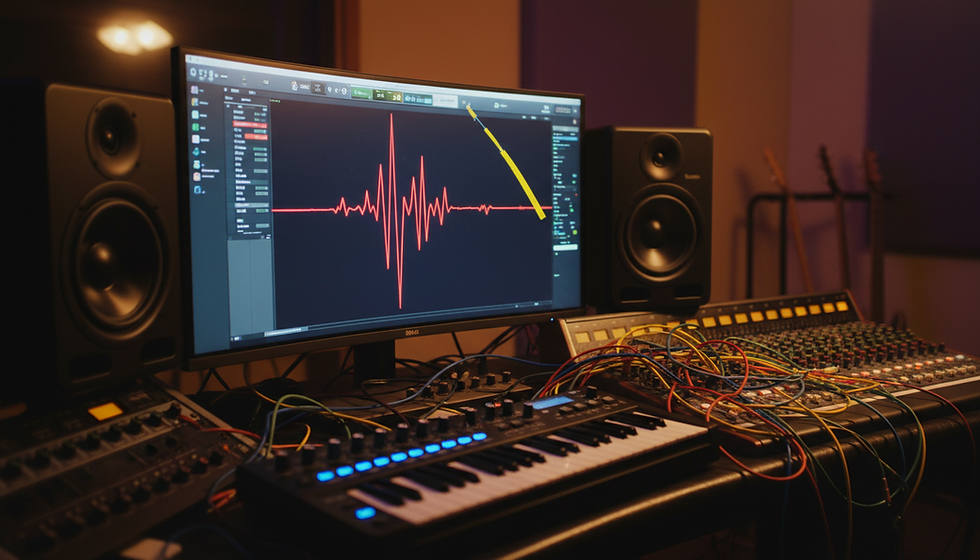
Web MIDI Controller Input | Hardware Integration | Plug in any standard USB MIDI keyboard. Notes light up in real time on screen, trigger low-latency playback, and integrate directly with ear-training exercises. |
Key & Tempo Detector | Audio Analysis | Drag and drop an audio loop or sample (WAV/MP3) to analyze estimated tempo (BPM), detect musical key, and generate a complementary chord palette. |
Scale → Chord Suggester | Harmonic Guidance | Select any key and scale to instantly view diatonic triads, 7th chords, and common chord substitutions. |
Progression Builder & MIDI Export | Songwriting | Sketch chord progressions along a visual timeline, audition them with grand piano samples, and export the .mid file straight into your DAW. |
Genre Theory Packs | Production Templates | Curated harmonic progressions tailored to specific genres (Lo-Fi, House, Neo-Soul, Cinematic) featuring signature voicings and tempo presets. |
Sheet Music & ABC Composer | Notation (Optional) | For hybrid composers and traditional arrangers, offers ABC-notation support with real-time rendering, audio playback, and MIDI export. |
Audio Latency Calibration | Technical Precision | Calibrates round-trip browser audio latency to synchronize scheduling across Bluetooth headphones, external interfaces, and browser engines. |
4. Pricing & Plans
Amonra Theory operates on a low-barrier freemium model:
Free Tier:
Access to fundamental theory lessons, standard virtual keyboard exploration, basic glossaries, and progress tracking.
Pro Tier (₹59):
Unlocks the entire professional utility suite, including Web MIDI hardware input, the Key & Tempo detector, Progression Builder with MIDI export, Genre Packs, advanced Ear Training customization, and Sheet Music export.
At an accessible price point, the Pro tier offers utility tools (such as key detection and MIDI progression export) typically locked behind expensive third-party VST plugins.
The Verdict: Who is Amonra Theory For?
Self-Taught Producers: If you've been relying on random MIDI chord packs or "cheat code" scales without understanding why chords work together, Amonra Theory provides the structural foundation.
DAW Users Looking for Speed: Tools like the Key & Tempo Detector and Scale-to-Chord Suggester solve workflow friction when sampling or laying down top-line melodies.
Musicians Wanting Better Ears: The gamified ear trainer trains you to identify intervals and chords by ear, cutting down the time it takes to transcribe ideas onto a keyboard.
If you are looking to write cleaner progressions and navigate your DAW's piano roll with confidence, check out Amonra Theory.
Comments