Dirtywave M8 and Rocksolid TEQ-6P Valve EQ Powering Mobile Music Production

Mobile music making no longer means sketching a rough idea and fixing it later in a studio. The gap between portable gear and full production tools keeps shrinking.
Two recent examples show the shift well. Dirtywave brings its M8 Music Tracker workflow to iOS and iPadOS. Rocksolid Audio pushes analog-style tone shaping with the TEQ-6P Valve EQ. One focuses on making songs anywhere. The other focuses on giving software the feel of individual hardware units.

Dirtywave M8 arrives on iOS and iPadOS
Dirtywave’s M8 Music Tracker is known for packing a full song-making system into a handheld device. The iOS and iPadOS version brings that same idea to Apple mobile devices.
A tracker is a music sequencer built around rows and columns. Notes, sounds, volume changes, and effect commands appear in a tight grid. It looks more like a fast musical spreadsheet than a piano roll. That layout makes it quick once the pattern clicks.
The big point is standalone use. The M8 app is not just a remote screen for other gear. It runs as its own music workstation on an iPhone or iPad. That matters for travel, couch writing, backstage edits, and small setups where a laptop feels too large.
It also keeps the M8 identity intact. The appeal is not only portability. It is the speed of the workflow. A producer can build patterns, chain them into songs, shape sounds, and refine arrangements from one focused system.
The core instrument design covers five sound engines
The M8 workflow works because its instruments are broad without becoming messy. Each track can trigger different instrument types, so one project can handle drums, bass, leads, sampled phrases, and external gear control.
Engine | What it does best |
WavSynth | Creates bright digital tones, basses, leads, and chord sounds from wave-based sources. |
Macrosynth | Offers a wide range of ready-to-shape sound models for quick sound design. |
FM Synth | Builds metallic, glassy, bell-like, and punchy sounds by using one wave to shape another. |
Sampler | Plays recorded audio, drum hits, chopped phrases, and user-loaded sounds. |
MIDI Out | Sends note and control data to other instruments, so the M8 can lead a wider setup. |
This mix helps the M8 avoid a common mobile production problem. Many portable tools do one thing well, then need extra apps or gear to finish the idea. The M8 can create complete tracks on its own.
WavSynth and Macrosynth cover quick electronic sounds. FM Synth adds sharper and more complex tones. Sampler brings in real audio and custom material. MIDI Out lets the M8 guide hardware synths, drum machines, or desktop tools when a larger rig is available.
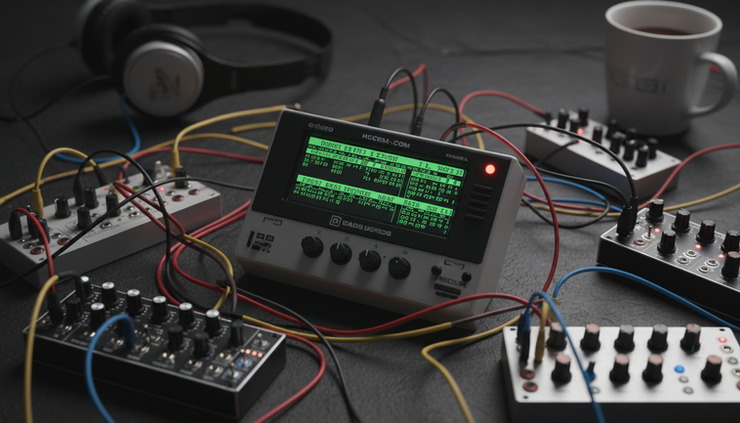
Sequencing stays the main attraction
The M8 is not only a sound box. Its sequencer is the center of the experience.
Patterns can hold note data and performance changes. Songs form by chaining patterns together. Commands can alter pitch, timing, volume, playback position, and other details. This is where tracker music becomes expressive.
For new users, that may sound strict. In practice, it makes editing fast. A snare can stutter for one beat. A bass note can slide into the next note. A sample can start from a different point. These moves sit directly in the pattern, so they are easy to see and repeat.
Project compatibility also matters. Projects can move between the iOS and iPadOS app and physical M8 models. That makes the app more than a side version. A track can start on an iPad, move to a physical M8 for live use, then return for more edits.
That kind of compatibility supports real work. It also protects time. No one wants to rebuild a song because the portable version and hardware version speak different languages.
Dirtywave MX adds performance control
Dirtywave has also introduced the Dirtywave MX performance mixer, which points to another part of the portable production trend.
Small music systems are no longer only for writing. They are becoming playable live rigs. A performance mixer gives hands-on control at the moment when a song leaves the grid and becomes a set.
A mixer can make the M8 feel less like a tiny song machine and more like a live instrument. Levels can move. Parts can come in and out. Effects can be shaped during a performance. The goal is clear. Keep the compact setup, but add physical control where it counts.
For electronic musicians, that is a strong pairing. The M8 handles tight sequencing and sound generation. The MX adds the tactile moves that matter on stage or during a one-take recording.
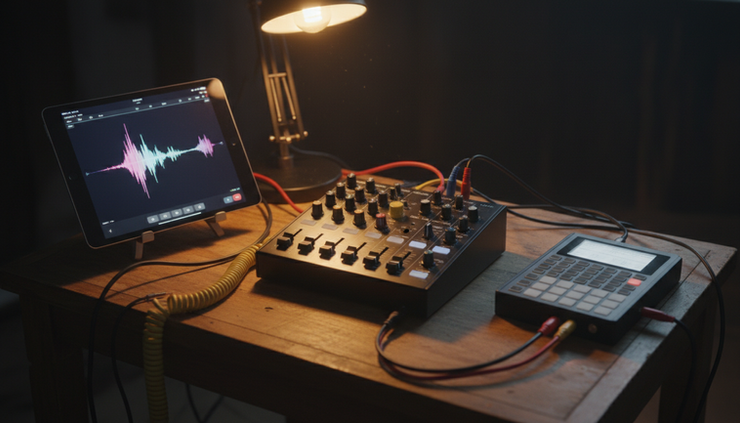
Rocksolid TEQ-6P Valve EQ focuses on analog behavior
Rocksolid Audio’s TEQ-6P Valve EQ comes from a different direction. It is a software equalizer, which means it changes the tone balance of audio. An equalizer can add weight to low sounds, soften harsh highs, or bring a vocal forward.
The TEQ-6P aims for valve-style tone. Valves, also called tubes, are older electronic parts used in classic audio gear. Many producers like them because they can add thickness, smoothness, and gentle color when pushed.
The key feature is real-time differential circuit simulation. In plain language, the software models how parts of an analog circuit react to changing audio while the music plays. It does not just apply a fixed tone curve. It reacts as the signal changes.
That approach can make an equalizer feel alive. Small changes in level can affect the result. Boosting one band may interact with the rest of the circuit. The sound can feel less flat than a simple digital equalizer.
The Unique Edition idea borrows from real hardware
Rocksolid’s “Unique Edition” approach is also interesting. In hardware, two units with the same model number are rarely perfectly identical. Tiny variations in parts can change how each unit reacts.
The Unique Edition idea brings that concept into software. Instead of treating every copy as a mathematically identical tool, the design can reflect the character of a specific version or variation.
For producers, this matters for feel more than novelty. A vocal chain, drum bus, or synth group can gain a little personality from a tool that does not behave like a plain filter. It also fits the broader theme of modern production. Software is getting more portable, but it is also chasing the small details that made hardware attractive in the first place.
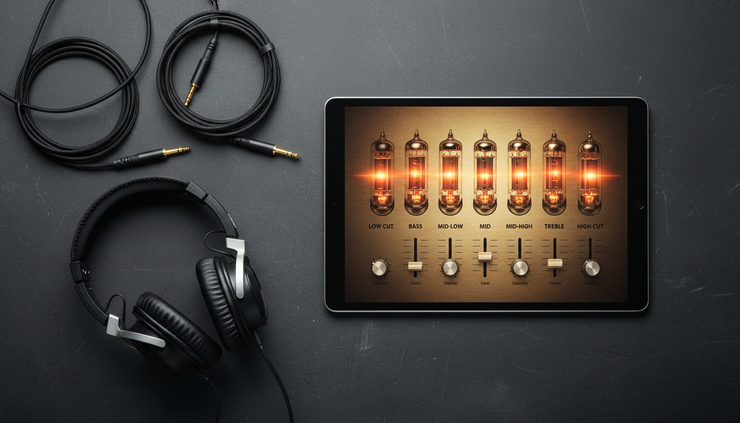
Why these tools point in the same direction
Dirtywave and Rocksolid are solving different problems, but both point toward the same future.
The M8 app brings a full composition system to mobile devices. It keeps project movement open between software and physical hardware. The MX mixer adds performance control for compact setups.
The TEQ-6P Valve EQ shows how tone tools are also changing. A mobile or small studio setup can now include detailed circuit-style processing that once required heavy hardware.
Together, Dirtywave M8 and Rocksolid TEQ-6P Valve EQ Powering Mobile Music Production is more than a headline. It reflects a real shift. Portability no longer means fewer creative choices. It means focused tools that can travel, perform, and still sound serious.
FAQ
Can the Dirtywave M8 app make music without extra hardware?
Yes. The iOS and iPadOS version works as a standalone music-making system. Extra controllers, audio gear, or physical M8 units can expand the setup, but they are not required to start making tracks.
What makes a tracker different from a normal music app?
A tracker uses rows and columns to enter notes and changes. It is compact and precise. Many producers like it because edits happen quickly once the workflow becomes familiar.
Do M8 app projects work with physical M8 models?
Yes, project compatibility is a key part of the appeal. Songs can move between the mobile app and physical M8 hardware, which helps with writing, editing, and performance.
What does the TEQ-6P Valve EQ do?
It changes the tone of audio with a valve-style sound. It can shape lows, mids, and highs while adding character based on circuit behavior.
What is the Unique Edition approach?
It treats software more like hardware. Small differences can give an edition its own character, instead of making every copy behave exactly the same.
Portable production is no longer a compromise. The best new tools keep the setup small while giving musicians serious sequencing, sound design, mixing, and tone shaping. That is the real advancement.
Comments