Why Audio Production Matters in Videos and Films

A film can survive a slightly soft shot. It rarely survives bad sound. Viewers may forgive imperfect lighting or a low-budget location, but muffled dialogue, harsh background noise, or uneven music can pull them out of the story in seconds.
That is why audio production deserves as much attention as the camera. Sound shapes mood, guides attention, builds tension, and makes images feel real. In many scenes, it does the emotional heavy lifting before the audience even notices it.

Sound makes stories feel alive
Images show what happens. Sound tells us how to feel about it.
A door closing can sound gentle, final, threatening, or lonely depending on its tone and timing. Footsteps in a hallway can signal comfort or danger. A distant train can make a scene feel restless. A low hum can make a normal room feel unsafe.
This is where sound becomes storytelling, not just decoration.
Good audio production adds layers that support the scene:
Dialogue
The clearest path to character, conflict, and plot.
Ambience
The natural sound of a place, such as wind, traffic, insects, waves, or room tone.
Foley
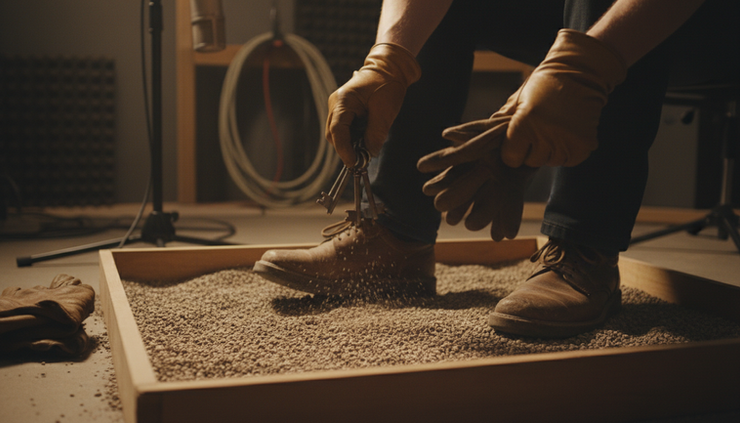
Custom-recorded sounds that match movement, such as clothing rustle, footsteps, or objects being handled.
Music
Emotional guidance that can lift, disturb, soften, or energize a moment.
Silence
A powerful choice that can make the audience lean in.
Think of a horror scene set in a dark house. The image may show a hallway, but the sound makes the hallway dangerous. A floorboard creaks. Air moves through a vent. A faint sound appears behind the character. The viewer starts listening for what might happen before anything appears on screen.
That tension is not accidental. It is built.
Audio drives emotion before the audience can explain why
Sound works fast because it often bypasses analysis. A sudden sharp noise can make someone jump before they understand the source. A warm musical cue can make a reunion feel tender before a word is spoken.
This emotional power is one reason sound is central to film language.
In Jaws, the famous two-note musical motif creates dread long before the shark appears. The sound tells the audience that danger is near. In Star Wars, lightsabers, blasters, droids, and starships gave the world a distinct identity. Those sounds are so recognizable that they can bring the films to mind without any image at all.
A Quiet Place offers another strong example. The story depends on silence, tiny noises, and the fear of being heard. Every breath, step, and object matters. The audience becomes hyper-aware because the sound mix trains them to listen.
In Dunkirk, sound plays a major role in building pressure. Aircraft engines, ticking rhythms, gunfire, and waves work together to keep tension high. The result is physical as much as emotional. The viewer feels trapped in the experience.
Clear audio keeps viewers engaged
Poor sound asks the audience to work too hard. If viewers strain to hear dialogue, adjust the volume every few minutes, or get distracted by hiss and hum, attention drops.
This matters for films, documentaries, YouTube videos, online courses, trailers, short films, and branded video content. Even when the visuals are strong, unclear sound can make a piece feel unfinished.
Quality audio improves viewer engagement in a few practical ways:
It makes dialogue easy to understand.
It keeps volume levels consistent.
It reduces distractions such as wind, echo, buzz, and handling noise.
It helps scenes flow smoothly from one shot to the next.
It gives the finished video a more polished feel.
Engagement is not only about excitement. It is also about trust. Clean audio signals care and control. When the sound feels balanced, viewers can focus on the story instead of the production.
This is especially valuable for videos watched on phones, laptops, and TVs with different speaker quality. A good mix translates well across devices. That means a whispered line stays audible, music does not overpower speech, and effects do not blast unexpectedly.
The technical craft behind great sound
Audio production has several stages, and each one affects the final result.
Recording captures the foundation
Good sound starts on set or during the shoot. The goal is to capture clean dialogue and useful natural sound. This often means using lavalier microphones, boom microphones, recorders, wind protection, and careful mic placement.
Location matters too. A beautiful room may sound terrible if it has hard walls, traffic noise, or a loud air conditioner. Crews often record room tone, a short sample of the location’s natural sound, so editors can smooth out cuts later.
Sound design builds the world
Sound design creates or selects the sounds that give a video its texture. Some sounds are realistic. Others are heightened for dramatic effect.
A punch in a movie rarely sounds like a real punch. A spaceship cannot be recorded in space. A monster may combine animal sounds, processed vocals, and invented textures. The point is not always literal accuracy. The point is believability within the story.
Mixing brings everything into balance
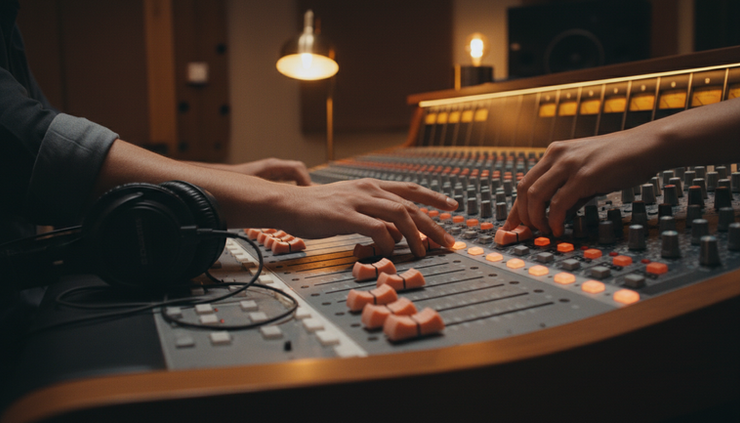
Mixing decides how dialogue, music, effects, and ambience sit together. A mixer shapes volume, space, tone, and movement.
Key tools include:
Equalization, often called `EQ`, to shape frequencies.
Compression to control dynamic range.
Reverb to create a sense of space.
Panning to place sounds left, right, or center.
Automation to adjust levels moment by moment.
The best mixes feel natural. Viewers do not think about them. They simply understand the scene, feel the emotion, and stay with the story.
Sound can become a signature
Some films and videos are remembered because of how they sound.
The roar of a dinosaur in Jurassic Park helped sell the creature as massive and alive. The spinning hallway and dreamlike musical textures in Inception helped create a sense of scale and instability. In many nature documentaries, careful field recording makes distant places feel immediate, from cracking ice to birds moving through dense forest.
Short-form videos benefit from the same thinking. A cooking video becomes more satisfying when the chop, sizzle, pour, and crunch are crisp. A travel film feels more immersive when wind, footsteps, market sounds, and water are shaped with care. A product demo becomes easier to follow when narration is clear and effects support each action instead of cluttering the track.
Great sound does not have to be loud. It has to be intentional.
Audio deserves a seat at the creative table
Treating sound as an afterthought limits what a video or film can become. The strongest productions think about audio from the start. They plan for microphones, locations, music, silence, editing, and final playback.
That planning pays off in the final cut. Stories feel richer. Scenes feel more focused. Emotions land harder. Viewers stay longer because nothing gets in the way of understanding and feeling the moment.

Strong visuals may catch attention, but strong sound holds it. Whether the project is a feature film, a documentary, a short video, or an online series, audio production is one of the clearest ways to make the work feel professional, emotional, and complete.
Comments